For most renters, this single decision determines how convenient (or frustrating) storage becomes day-to-day. But it also affects something less obvious: whether your items stay in good condition over time.
The choice matters beyond just access style. It shapes item protection, how often you'll realistically use the unit, and whether your monthly cost actually delivers value. A cheaper unit that damages your furniture isn't a bargain.
This guide breaks down both storage types side by side, covers what each is best suited for, and gives you a practical framework to make a confident decision — especially if you're storing in Minnesota, where climate makes the choice more consequential than it might be elsewhere.
Key Takeaways
- Drive-up storage offers ground-level, vehicle-direct access — best for heavy items, frequent visits, and budget-conscious renters.
- Indoor storage sits inside a building with added weather protection — best for sensitive, valuable, or long-term stored items.
- Drive-up units generally cost less; indoor units offer better protection from temperature extremes.
- In Minnesota, winters regularly drop below 0°F — a real concern for anything not built to handle the cold.
- The right choice hinges on what you're storing, how often you'll visit, and how sensitive your items are to temperature swings.
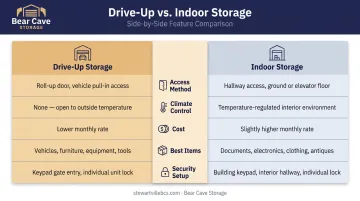
Drive-Up vs. Indoor Storage: Quick Comparison
Both unit types are widely available and genuinely secure. The right choice depends on your specific use case, not one being universally superior.
| Factor | Drive-Up Storage | Indoor Storage |
|---|---|---|
| Access Method | Ground-level exterior door; pull your vehicle directly to the unit | Inside a building, accessed through interior hallways; upper floors may require an elevator |
| Climate Control | Not climate-controlled; temperature follows outdoor conditions | Available with climate control at many facilities (typically 55°F–80°F); not all indoor units include it — confirm with your facility |
| Cost | Generally lower monthly rate | Slightly higher due to building infrastructure and climate features |
| Best For (Items) | Furniture, tools, seasonal gear, vehicles, motorcycles, business equipment | Electronics, documents, antiques, clothing, artwork, musical instruments |
| Security Setup | Gated perimeter, surveillance cameras, personal lock | Keypad building entry, interior corridor access, CCTV |
What Is Drive-Up Access Storage?
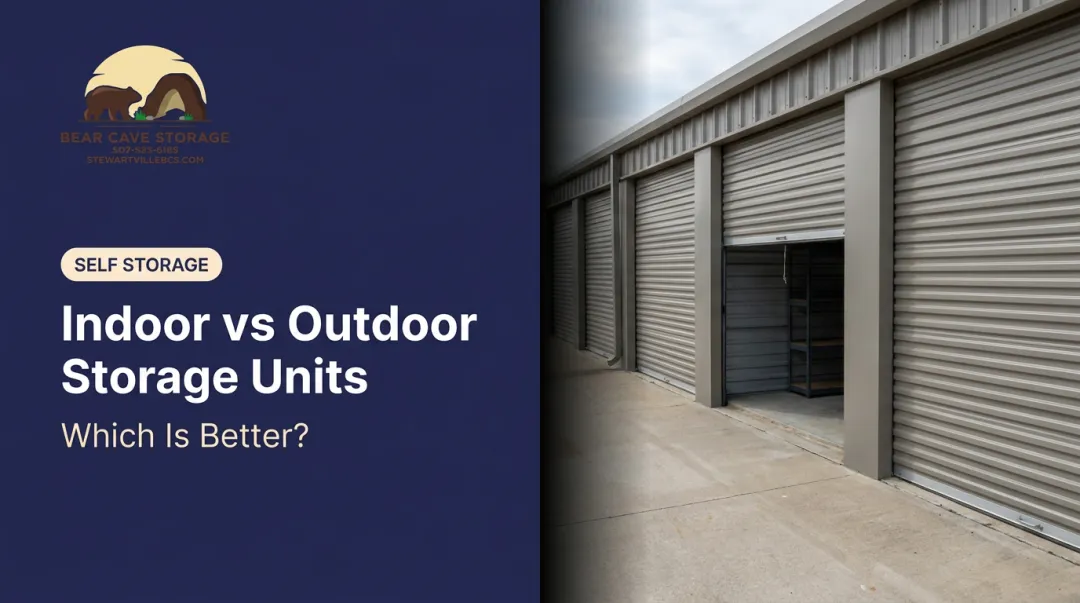
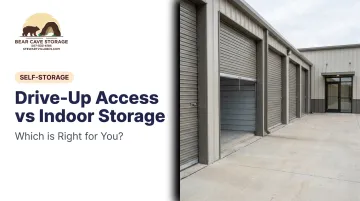
Drive-up storage means exactly what it sounds like: your unit has an exterior roll-up door at ground level, and you pull your car, truck, or moving van directly in front of it. No hallways, no stairs, no elevator. It works like a detached garage you keep off-site.
SpareFoot describes drive-up units as having exterior doors and roll-up, garage-like access where renters can pull a vehicle directly to the unit door. StorageCafe notes this setup eliminates the need to carry items through long interior corridors — a significant time-saver when you're moving anything heavy or awkward.
What Works Well in Drive-Up Units
Drive-up storage handles a wide range of durable, bulky items comfortably:
- Furniture, appliances, and household goods during a renovation
- Lawn equipment, snow blowers, and seasonal tools
- Sporting gear — bikes, kayaks, ATVs, camping equipment
- Motorcycles and smaller vehicles
- Contractor supplies and job-site tools rotated between projects
- Business inventory that needs regular swapping out
Landscapers and contractors benefit from drive-up access because they can back a truck to the unit, grab what they need for the day's job, and swap it out on the return trip. It functions as a practical mini-warehouse without the overhead.
The Core Limitation: Temperature
Most drive-up units are not climate-controlled. Interior temperatures track outdoor conditions — which in Minnesota means brutal cold in winter and heat in summer. For durable items like tools, seasonal gear, or recreational equipment, that's no problem.
For anything sensitive to temperature or humidity swings — electronics, photographs, wooden furniture, documents, or musical instruments — an enclosed indoor unit is worth considering instead. The protection from the elements matters more than the convenience of drive-up access.
When Drive-Up Is the Right Call
Drive-up wins in these everyday situations:
- Short-term storage during a home renovation or between moves
- Storing seasonal equipment (snow blowers in summer, patio furniture in winter)
- Contractors or small business owners rotating tools and supplies regularly
- Families storing a motorcycle, ATV, or recreational vehicle during the off-season
- Anyone who needs fast, frequent access without navigating a building
If you'll be in and out regularly with large or heavy items, drive-up access removes nearly every friction point from the process.
What Is Indoor Storage?
Indoor storage units sit inside a larger building structure. Access runs through interior hallways, and upper-floor units may require an elevator. These facilities are often multi-story, and some offer climate control as an optional upgrade — though not all facilities include it.
StorageCafe defines indoor units as located within a larger building, with upper floors served by freight-capable elevators and loading platforms. What separates indoor from drive-up is the structural envelope around your belongings — walls, a roof, and an enclosed corridor between your unit and the outside world.
Why the Building Matters
Indoor storage offers protection that drive-up units simply can't match:
- Weather shielding — Enclosed walls and corridors block direct exposure to rain, wind, and temperature swings
- Reduced moisture exposure — Controlled humidity helps prevent mold, rust, and warping
- Cleaner environment — Less dust, fewer pests, and no direct weather exposure
- Additional access layers — You clear a keypad entry before reaching your unit door
For sensitive items, the enclosed structure makes a real difference. According to the National Archives, papers and photographs degrade faster when exposed to heat, humidity swings, and moisture — the same conditions that direct outdoor exposure introduces. Facilities that add climate control (maintaining specific temperature and humidity ranges) take this a step further, though that's a separate feature to confirm when choosing a unit.
What Belongs in Indoor Storage
Indoor units are the right choice for items that don't tolerate environmental stress well:
- Paper records, documents, and photo archives
- Electronics and computer equipment
- Wooden or leather furniture stored long-term
- Antiques, heirlooms, and collectibles
- Musical instruments and artwork
- Clothing and textiles
The Trade-Offs
Indoor storage isn't without drawbacks. Monthly rates run higher than drive-up units due to building infrastructure and any climate systems in place. If your unit is on an upper floor, loading bulky furniture means elevator trips — plan for extra time. And the added layers of building access — while good for security — mean slightly less spontaneous quick-in, quick-out convenience.
When Indoor Storage Is the Right Call
Those trade-offs are worth it in the right circumstances. Indoor storage fits these situations well:
- A family storing heirlooms and furniture during a home sale
- A small business owner archiving years of paper records
- Someone protecting a valuable instrument or art collection
- A renter between apartments who needs to store electronics and clothing for several months
If the items can't be replaced or repurchased, the added protection of an indoor unit is usually worth the higher monthly rate.
Which Is Right for You? A Practical Decision Framework
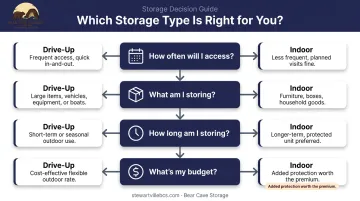
Four questions will get you to the right answer faster than any general comparison.
1. How often will I access this unit? Frequent visits (weekly or more) favor drive-up. Occasional access (monthly or less) makes the indoor layout less inconvenient.
2. What am I storing? Durable, weather-resistant items like tools, seasonal gear, and vehicles → drive-up. Sensitive items like electronics, documents, or heirlooms → indoor.
3. How long am I storing? Short-term (under 6 months) → drive-up is usually fine. Long-term (6+ months, especially through a Minnesota winter) → indoor provides more peace of mind.
4. What's my budget? Drive-up is typically the more affordable option. Nationally, SpareFoot's 2026 industry statistics show a 10×10 non-climate unit averages around $119/month, while climate-controlled units average around $134/month — roughly 13% more according to StorageCafe. At Bear Cave Storage, indoor units start at $63/month for a 10×10, with discounts available for 6-month (5% off) or 12-month (10% off) commitments.
The cost calculation isn't just about monthly rent. Replacing damaged electronics or warped furniture can far exceed whatever you saved by choosing the cheaper unit for the wrong items.
A Quick Summary
| Choose drive-up if… | Choose indoor if… |
|---|---|
| You need frequent, fast access | You're storing for 6+ months |
| Storing tools, gear, or vehicles | Storing electronics, documents, antiques |
| You have a tighter monthly budget | Items are irreplaceable or expensive to replace |
| Short-term or seasonal storage | Storing through a Minnesota winter |
On Security: Dispelling a Common Misconception
Drive-up units are sometimes assumed to be less secure than indoor units. At well-run facilities, that's not accurate. Bear Cave Storage provides 24/7 gated access, continuous surveillance, and personal locks across all unit types at their Rochester and Stewartville locations — whether you're in a drive-up accessible indoor unit or an outdoor fenced space.
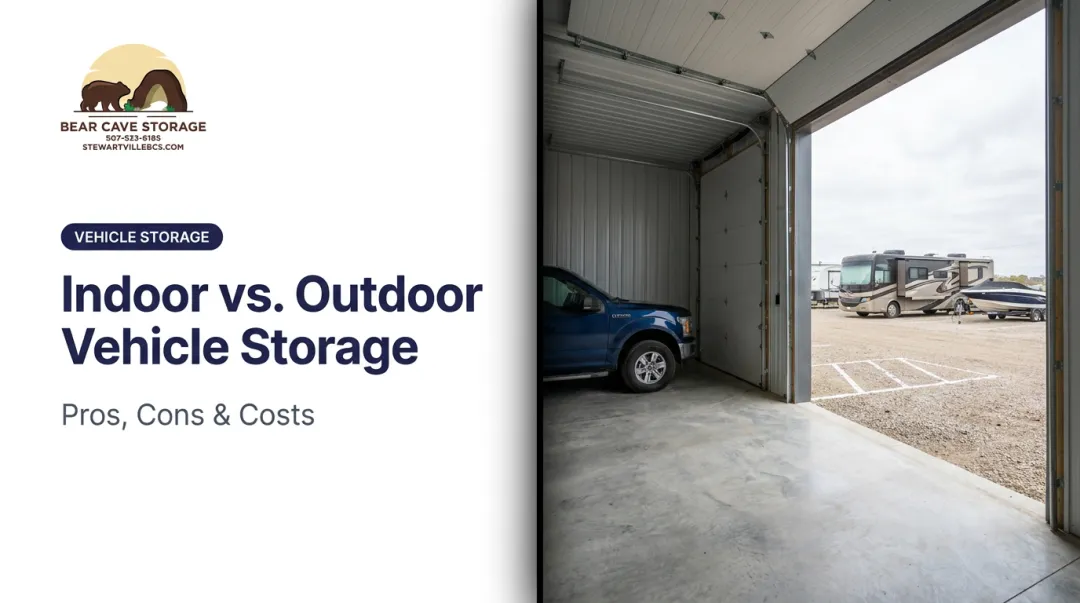
Bear Cave's indoor storage units combine both features: enclosed, weather-protected storage with drive-up access directly to your unit door. No hallways required.
Storing in Minnesota: Why Climate Matters Here
Minnesota's weather makes this decision more consequential than it would be in a milder state.
Rochester's official NWS climate data tells the story:
- 35.6 days per year with lows at or below 0°F
- 163+ days with lows at or below freezing
- ~70% of annual rainfall arrives in spring and summer
Drive-up units offer no temperature buffer — items experience the full swing from subzero cold to summer humidity. Snow blowers, lawn tools, kayaks, and seasonal gear handle that fine. Electronics, documents, and furniture may not.

If you're storing anything through the cold season that isn't built for it, Bear Cave's enclosed indoor units offer weather protection at a price point that's worth the difference. For seasonal equipment and gear that can handle the elements, drive-up is the straightforward, practical call.
Conclusion
Drive-up access delivers unbeatable convenience and affordability for rugged, frequently accessed, and large items. Indoor storage provides the protection and stability that valuables, sensitive belongings, and long-term storage demand. The right choice comes down to what you're storing, how often you need it, and how much protection it requires.
If you're in the Rochester, Stewartville, or nearby Minnesota communities and aren't sure which option fits your situation, Bear Cave Storage offers both types across its locations. You can rent online 24/7, explore available unit sizes, or reach the team directly at (507) 533-6185 or sales@bearcavestorage.com. Office hours run 9:00 AM–5:00 PM, seven days a week.
Frequently Asked Questions
What does drive-up access mean for storage units?
Drive-up access means your storage unit door faces an outdoor driveway, so you can park directly in front of it for loading and unloading. There are no hallways, stairs, or elevators involved — you drive up, open the door, and load or unload directly from your vehicle.
Is it better to have drive-up access storage or climate-controlled storage?
It depends on what you're storing. Drive-up suits durable items and frequent access needs well. For electronics, wooden furniture, documents, antiques, and anything sensitive to temperature or humidity swings, you'll want a facility that offers climate-controlled storage specifically.
Can drive-up storage units be climate-controlled?
Climate-controlled drive-up units exist but aren't the standard. Most drive-up units have exterior designs that make climate control harder to implement. If you want both convenience and temperature protection, ask the facility directly what's available, as some do offer the combination.
Which type of storage unit is more affordable — drive-up or indoor?
Drive-up units generally cost less per month than indoor units, largely because they lack climate-control infrastructure. That said, if you store temperature-sensitive items in a non-climate-controlled unit and they get damaged, the replacement cost can easily outweigh the monthly savings.
What items should NOT be stored in a drive-up storage unit?
Items most vulnerable to temperature and humidity extremes don't belong in a standard drive-up unit. That includes electronics, wooden and leather furniture, photographs, artwork, antiques, important documents, musical instruments, and wine. For those items, look for a facility that specifically offers climate-controlled storage.
What are the main types of self-storage units?
The four practical categories are: drive-up (exterior, vehicle-direct access), indoor/hallway-access units (inside a building), climate-controlled units (regulated temperature and humidity), and vehicle or specialty storage (for RVs, boats, and cars). Many facilities offer a combination, so it's worth confirming which types are available at the location you're considering. Bear Cave Storage, for example, offers drive-up indoor units and outdoor fenced spaces for vehicles, RVs, boats, and trailers.