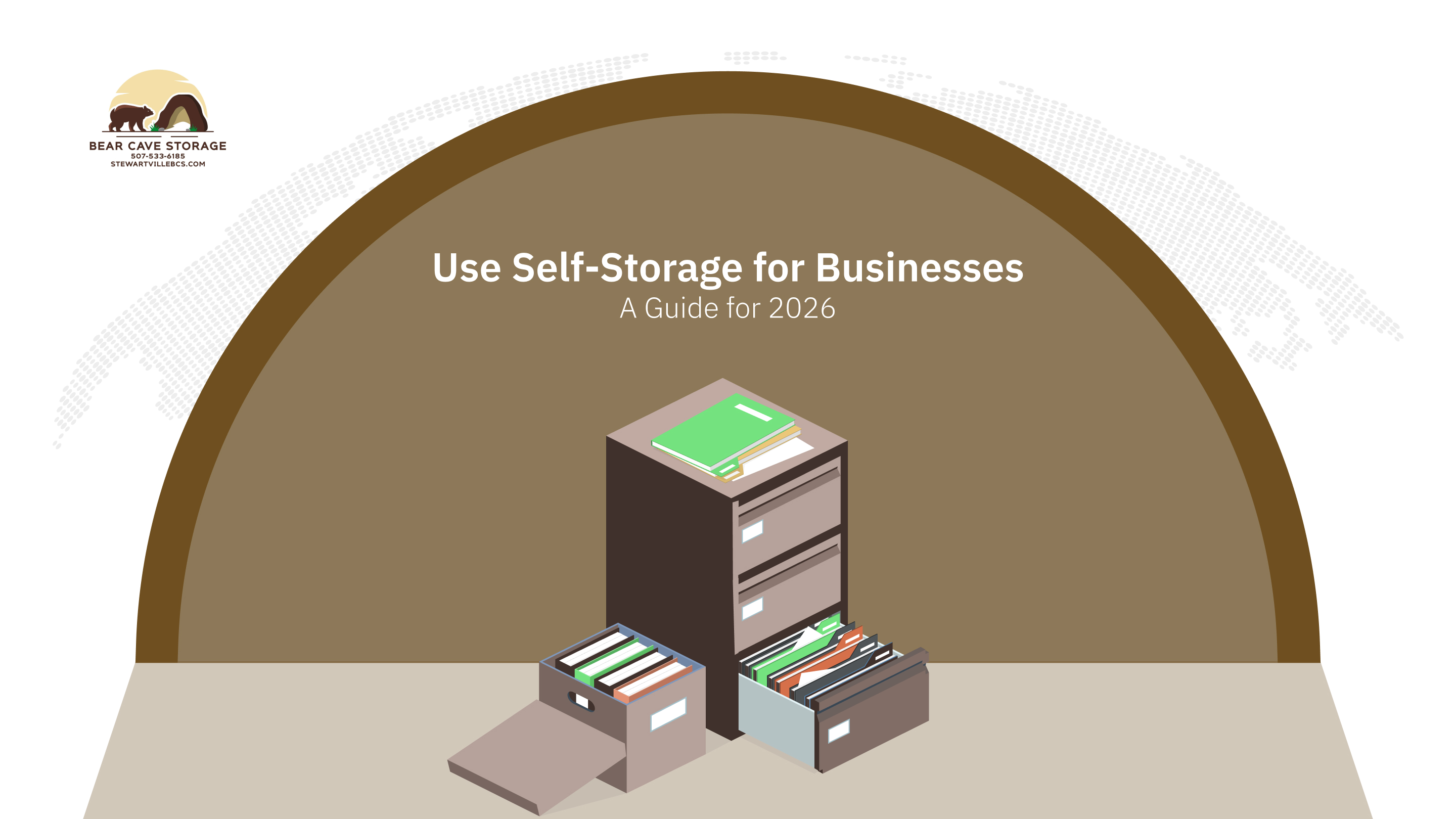
As a business in Stewartville, you might have boxes of client tax files piling up in the back office. With tax season approaching, your staff struggles to find the right documents quickly, creating delays and stress. Physical records are important, but keeping them onsite is consuming valuable workspace and slowing down operations.
This is where self-storage for business documents becomes a game-changer. By moving long-term records to a secure, organized facility, businesses can free up office space, protect sensitive files, and streamline day-to-day workflows.
In this guide, we’ll cover everything you need to know about using self-storage for business documents in 2026, from choosing the right unit to best practices for organizing, safeguarding, and accessing your records efficiently.
At a Glance
Moving long-term or rarely used documents to a self-storage unit helps businesses declutter their workspace and improve day-to-day operations.
Choosing a storage facility with proper climate control, security systems, and clean, maintained units safeguards sensitive business documents from damage, theft, and environmental risks.
Using labeled boxes, uniform containers, shelving, and a digital index ensures documents are easy to locate during audits, tax season, or client requests.
Businesses can start with a smaller unit and expand as document volume grows, making self-storage a cost-effective, adaptable solution for companies of all sizes.
With convenient access, strong security, and flexible unit sizes, Bear Cave Storage acts like an extension of your office, helping local businesses stay organized, efficient, and compliant.
Why Businesses Store Documents Offsite
Most businesses still rely on physical records, either for compliance, long-term reference, or legal requirements. But keeping everything onsite isn’t always practical. Over time, paper files take up valuable space that could be used for workstations, client areas, or operational needs. Offsite storage helps businesses:
Reduce office clutter: Freeing up shelving, cabinets, and back-office space makes daily operations smoother.
Enhance security: Sensitive files are safer in a monitored, controlled environment rather than an open office or shared workspace.
Improve compliance: Industries like healthcare, finance, and legal services often require long-term record retention. Self-storage ensures these documents stay intact and organized.
Prepare for audits or tax seasons: Having archives in one dedicated location makes retrieval easier when records are needed.
Support remote or hybrid teams: When staff works from multiple locations, keeping infrequently used files offsite prevents congestion in a smaller office footprint.
Offsite storage is simply more efficient for businesses wanting to stay organized without expanding their physical office space.
For businesses in Stewartville, using local storage facilities can be particularly advantageous. Secure, climate-controlled units provide easy access to records while freeing up office space, helping small and medium-sized businesses maintain compliance, efficiency, and a professional workspace.
Need secure, accessible storage in Stewartville? Bear Cave Storage offers a range of unit sizes, 24/7 security, and easy drive-up access. Rent Online
What Types of Documents Belong in Self-Storage?
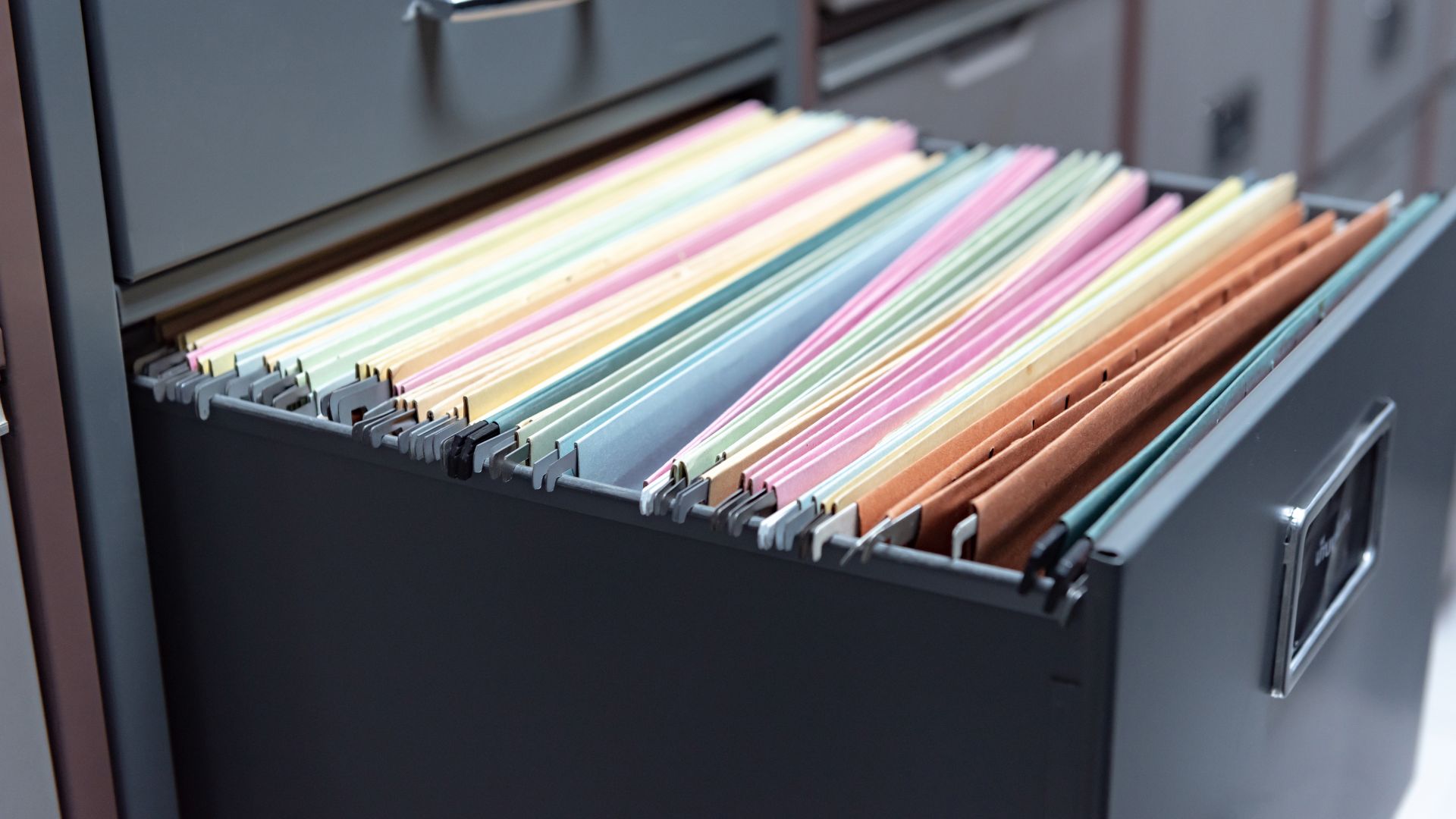
Not every file needs to take up prime office space. Self-storage is ideal for documents you are required to retain but rarely access, helping businesses stay organized while freeing up room for day-to-day operations.
Here’s a deeper look at the types of records that are well-suited for storage:
1. Financial and Tax Records
These include invoices, receipts, bank statements, P&L reports, payroll summaries, and other documentation needed for audits or government filings. Many businesses are legally required to keep financial records for several years.
Storing them offsite prevents clutter and ensures they are safe from accidental loss or damage in the office. For example, a Stewartville accounting firm could archive prior-year tax returns in self-storage, keeping current-year files within easy reach.
2. Legal Documents
Contracts, permits, leases, insurance policies, intellectual property filings, and regulatory paperwork are critical for protecting a business legally. Keeping older contracts or completed agreements in a secure storage unit allows businesses to retain necessary documentation without crowding office filing cabinets.
Law firms, real estate agencies, and licensing-dependent businesses can particularly benefit from offsite storage to maintain compliance and easy retrieval.
3. Employee and HR Files
Personnel records, applications, performance evaluations, payroll documents, onboarding forms, and training records often need long-term retention for compliance and reference.
By moving older employee files to self-storage, HR departments can free up office space and reduce the risk of losing sensitive information while still maintaining access to historical records when needed.
4. Client or Project Archives
Completed project files, case studies, blueprints, creative drafts, and reference materials can accumulate quickly, especially in design, construction, or consulting firms.
Self-storage allows businesses to organize these archives by project or client, ensuring that past work is preserved for reference, reporting, or potential audits, without cluttering office space.
5. Healthcare and Patient Files
Medical offices, dental practices, and wellness clinics are required to maintain patient records under strict retention laws.
Self-storage provides a secure, organized way to store older patient files while ensuring they remain protected from environmental hazards like humidity or pests, which could compromise sensitive information.
6. Historical or Administrative Records
Founders’ notes, property deeds, board meeting minutes, strategic plans, and other legacy business documents often hold historical or operational value but are not accessed regularly.
Archiving these materials offsite preserves them for reference or legal purposes while freeing up office space for active operations.
When deciding what to store, businesses should also evaluate:
Legal retention requirements: Different industries have varying mandates for how long documents must be retained.
Frequency of access: Files needed rarely are perfect for offsite storage, while frequently used files should remain in the office.
Protection needs: Sensitive documents benefit from climate-controlled units, secure locks, and proper organization to prevent damage or unauthorized access.
In short, any document that is important, sensitive, or required to be retained, but not used daily, can benefit from self-storage, helping businesses stay organized, secure, and compliant.
Store Smart in Stewartville! Make room at home and protect seasonal items with secure, climate‑controlled storage near you. Reserve Your Unit Now
Benefits of Using Self-Storage for Paper Records
Businesses in 2026 are dealing with more data, more compliance rules, and tighter workspace limitations. Self-storage provides practical advantages that support smoother operations and better document management.
Here are some benefits of self-storage for business documents:
Better Security: Modern storage facilities offer gated access, surveillance, and locked units, ideal for keeping sensitive files protected from unauthorized access.
Protection From Damage: High-quality storage units help safeguard paper from moisture, temperature fluctuations, pests, or accidental handling that could compromise important records.
More Office Space: Removing bulky file cabinets and archive boxes frees up room for employees, equipment, or customer-facing areas.
Improved Organization: With a dedicated storage unit, companies can create a clear structure for archiving: labeled boxes, shelving systems, and categorized storage layouts that simplify retrieval.
Cost-Effective Solution: Compared to renting additional office space or adding built-in storage rooms, self-storage offers an affordable alternative without long-term commitments.
As your business expands, so does your paperwork. Storage units can be easily upsized or downsized based on your evolving document needs.
However, it is also important to be aware of some challenges when storing documents, along with best practices to overcome them.
Common Challenges in Storing Business Documents (and Solutions)
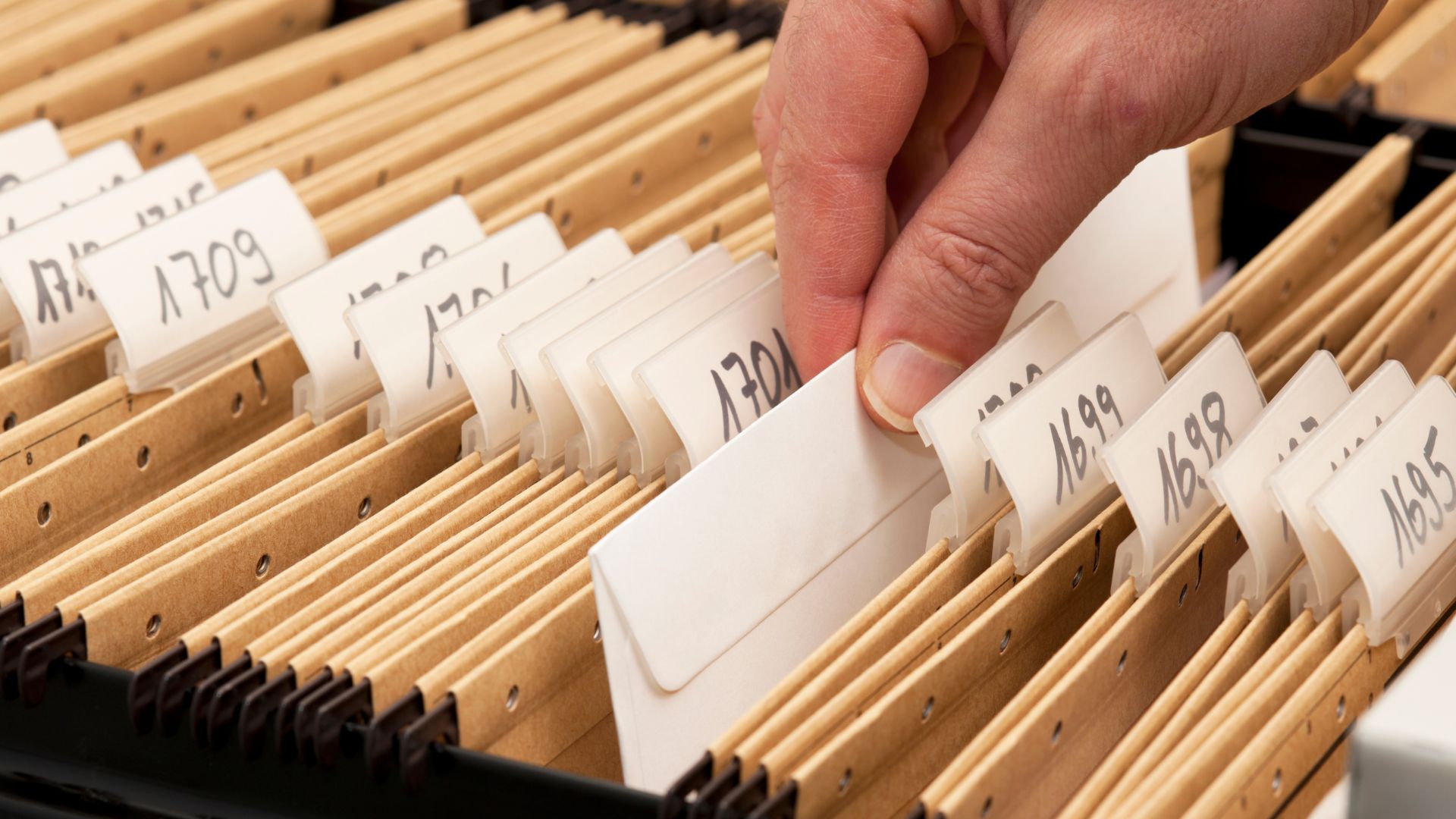
Even with the shift toward digital workflows, managing physical paperwork still comes with hurdles. Self-storage can solve many of these issues, but only when businesses approach document storage the right way.
Here are the most common challenges and practical solutions:
Challenge 1: Paper Deterioration From Moisture, Heat, or Pests
Paper is extremely sensitive to humidity, temperature changes, and insects. Poor environments can lead to fading, mold, and irreversible damage.
Solution: Choose a clean, well-maintained storage facility and use airtight bins, moisture absorbers, and raised shelving. For sensitive archives, consider a climate-controlled unit to keep temperature and humidity stable year-round.
Challenge 2: Losing Track of Important Documents
Storing boxes without a clear system often leads to confusion, misplacement, or time wasted during retrieval.
Solution: Implement a simple but consistent organization method:
Use uniform, labeled containers
Sort documents by category, year, or department
Maintain a digital index or spreadsheet noting where each file is located
A structured system makes audits, tax prep, and compliance checks far easier.
Challenge 3: Limited Workspace or Overfilled Storage Rooms
Small and midsize businesses often lack the physical space to keep years of archives onsite.
Solution: Move nonessential or long-term files to a dedicated self-storage unit. This frees up valuable office space while keeping documents secure and accessible when needed.
Challenge 4: Concerns About Data Privacy and File Security
HR files, financial records, and legal documents contain sensitive information that must be protected.
Solution: Select a storage provider offering strong security features such as:
Gated entry
Individual unit locks
24/7 video surveillance
Controlled access
Use locking file cabinets or tamper-proof containers inside your unit for an additional layer of protection.
Challenge 5: Difficulty Scaling as Document Volume Grows
As businesses expand, paperwork tends to multiply. Small in-office storage setups quickly become overcrowded.
Solution: Self-storage offers easy scalability. Start with a smaller unit and upgrade as your document volume increases, without long-term contracts or renovation costs.
Why Stewartville Businesses Should Choose Bear Cave Storage
For local businesses, storage is about keeping operations smooth, inventory protected, and workflows predictable. Bear Cave Storage is designed to meet the everyday needs of Stewartville retailers, contractors, and service providers.
Clean, Well-Maintained Units: Climate-aware, tidy units protect inventory, equipment, and documents from dust, moisture, and temperature swings.
Protection from Minnesota’s Seasonal Shifts: Units shield assets from heat, cold, and humidity, keeping items stable and ready for use year-round.
Secure and Accessible: Gated entry, surveillance, and wide drive-up lanes let businesses store valuable items confidently while allowing fast, convenient access.
Flexible Unit Options: From small spaces for documents to larger units for inventory or equipment, Bear Cave can scale with your business needs.
With reliable upkeep, strong security, and flexible options, Bear Cave Storage acts like an extension of your workspace, helping Stewartville businesses stay organized, efficient, and ready to grow.
Final Takeaway
Storing business documents effectively requires planning, organization, and the right storage environment. Using labeled boxes, proper shelving, and accessible units helps your workflow stay smooth and efficient.
The best solution goes beyond extra space. It offers secure, climate-controlled conditions and a facility designed to support daily business needs. Bear Cave Storage in Stewartville, MN provides clean, well-maintained units with easy access, helping local businesses protect important records, stay organized, and scale as needed.
Keep your documents safe and your office clutter-free. Contact Bear Cave Storage today.
FAQs
1. What business documents can I store at Bear Cave Storage?
You can store financial records, contracts, HR files, client/project archives, healthcare records, and historical documents securely. These units help keep your office organized and protect sensitive information.
2. Are climate-controlled units available for sensitive files?
Yes. Climate-controlled units protect paper from humidity, temperature swings, and seasonal weather. This ensures long-term preservation of your important documents.
3. How secure is Bear Cave Storage for confidential files?
Bear Cave offers gated access, 24/7 surveillance, individual unit locks, and controlled entry. These features keep sensitive records safe while giving you peace of mind.
4. Can I access stored documents easily?
Yes. Units have drive-up access and convenient layouts, allowing quick retrieval of files whenever needed. This keeps your workflow efficient without disrupting operations.
5. Can I scale my unit as my document volume grows?
Absolutely. Flexible unit sizes let businesses expand or downsize as needed. This adaptability ensures your storage solution grows alongside your business.